Consumer Behaviour: An Introduction
A practical, modern textbook for teaching consumer behaviour
Consumer Behaviour: An Introduction – textbook on a wooden table

Helping students connect the dots in consumer behaviour

Lecturers teaching consumer behaviour face a recurring challenges:

  • Most available textbooks are written for academic specialists and span 600+ pages.
  • Truly undergraduate / bachelor level textbooks are hard to find.
  • Many books fail to translate theory into real marketing messages and campaigns.
  • Students encounter different decision models across courses, leading to confusion rather than insight.
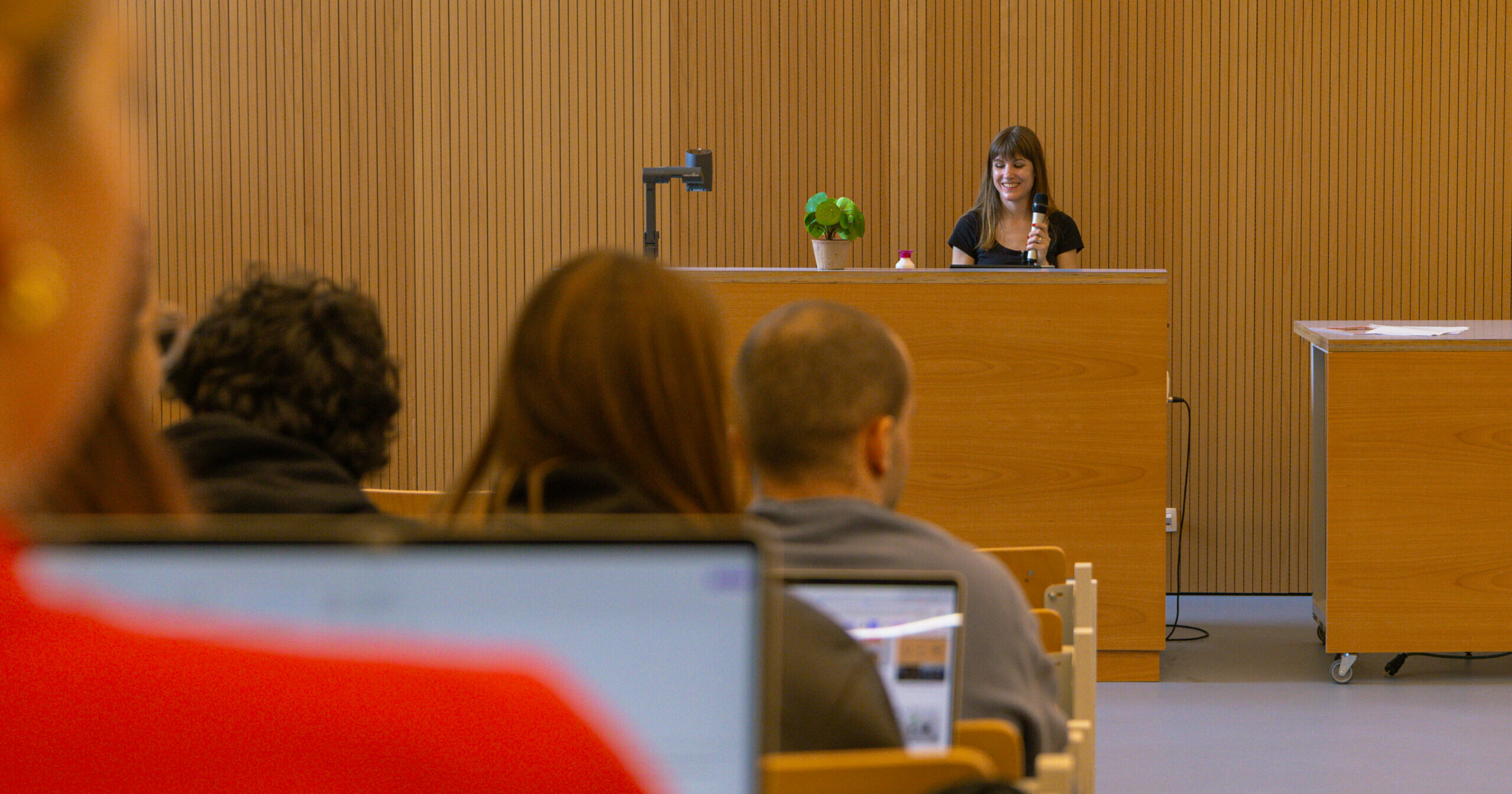
saar-bossuyt-phd-teaching-consumer-behaviour-by-SimonFabry

Written by experienced lecturers

Written by lecturers with backgrounds in marketing, economics, and psychology, with over 30 years of combined teaching experience in higher education.

They teach consumer behaviour on a weekly basis and had long missed a coherent bachelor-level textbook.


What lecturers and students say

Lecturers who already use the book highlight its clarity, structure, and relevance.

A realistic approach to consumer decision-making

Most consumer behaviour textbooks still rely on models that assume consumers make careful, rational, step-by-step decisions.

In reality, this is rarely the case.

What this book stands for

  • Consumer behaviour as it actually happens
  • One coherent framework instead of fragmented models
  • Clarity over academic completeness
  • Integration instead of confusion

What this book avoids

  • Overloaded academic theory
  • Isolated models that contradict other courses
  • 600-page reference books unsuited for bachelor students
Person holding colourful shopping bags – illustrating irrational consumer decision-making

Beyond the rational consumer

Rather than presenting consumer behaviour as a linear or purely rational process, this textbook starts from a more realistic assumption: most decisions are messy, fragmented, and partly automatic.

The book draws on insights from psychology, behavioural economics and contemporary consumer research.

Key concepts such as System 1 and System 2 thinking, nudging, biases, and social influence are used as central explanatory mechanisms — not as side notes.

Complex theories are intentionally simplified to support understanding.

Designed for teaching consumer behaviour

For bachelor and undergraduate students

This textbook is designed for:

  • Bachelor and undergraduate students in
    marketing, communication, business administration, commercial economics, and psychology
  • Courses introducing consumer behaviour or buyer decision-making
  • Programmes where students benefit from realistic examples and applied theory

No prior knowledge of marketing is required. The book includes a clear introduction to key marketing concepts, making it suitable for students encountering consumer behaviour for the first time.

For advanced courses and professionals

The book can also be used

  • In academic Master’s programmes, when combined with academic articles
  • By professionals (marketers, entrepreneurs, consultants) who want a clear and practice-oriented overview of consumer behaviour

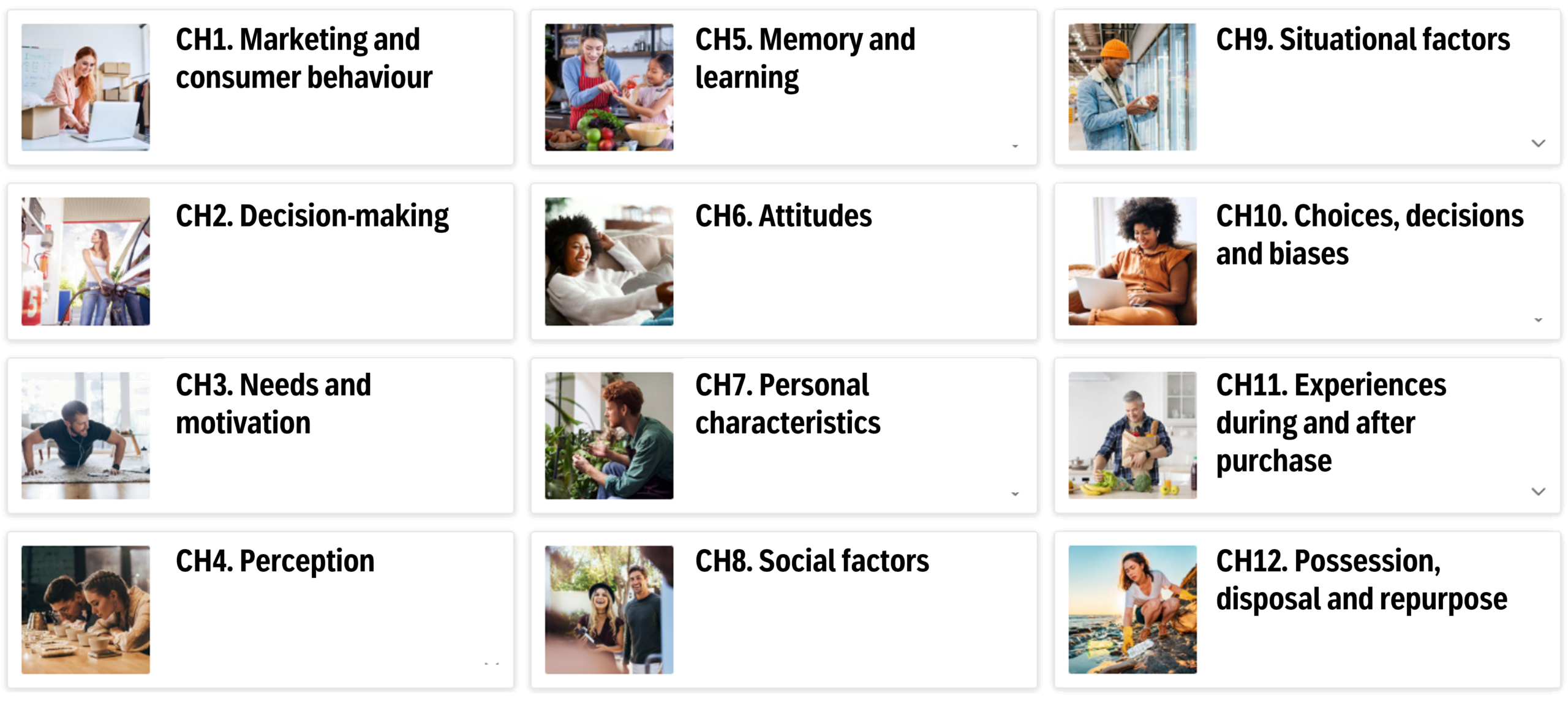
Table of contents

Publication details

Consumer Behaviour: An Introduction is available in multiple formats, allowing institutions and students to choose the option that best fits their teaching and learning context.

Pricing and ordering are handled by Pearson Benelux.

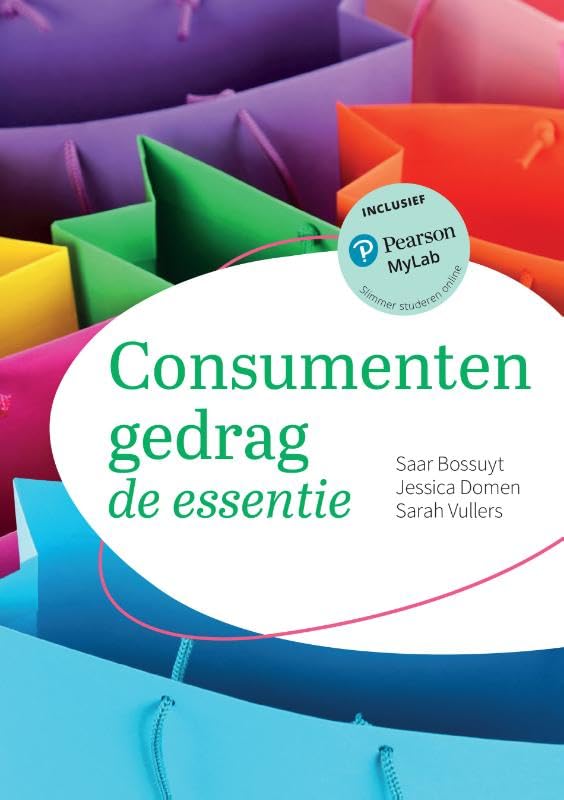
Consumentengedrag, de essentie – Dutch edition textbook cover by Bossuyt, Domen, and Vullers

Dutch edition: Consumentengedrag, de essentie

  • Paperback + MyLab:
    ISBN 9789043042819
  • eText + MyLab:
    ISBN 9789043042833
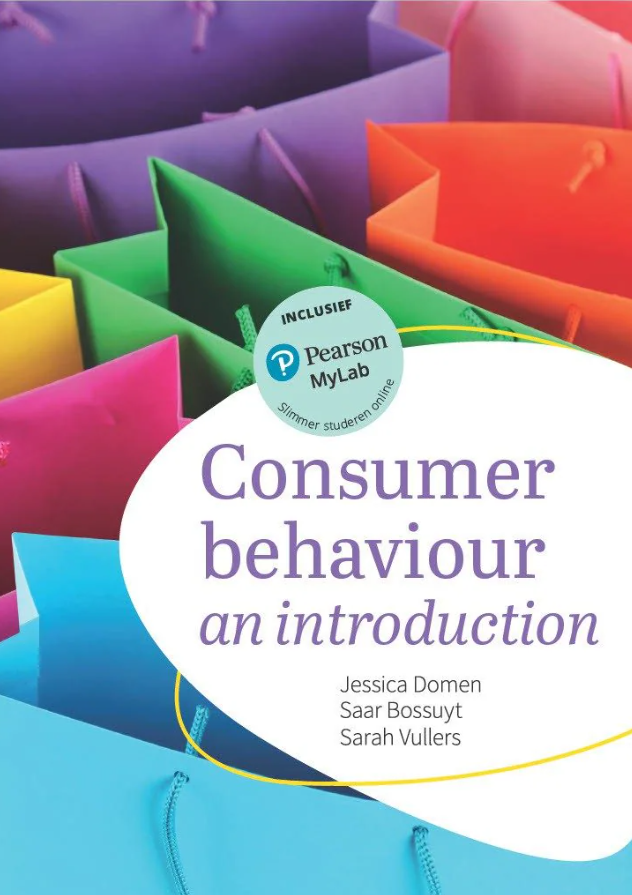
Consumer Behaviour: An Introduction – English edition textbook cover by Domen, Bossuyt, and Vullers

English edition: Consumer Behaviour: an introduction

  • Paperback + MyLab:
    ISBN 9789043042857
  • eText + MyLab:
    ISBN 9789043042871

Topics

The book covers both classical and contemporary topics in consumer behaviour, structured around the Messy Middle framework.

Interior pages of Consumer Behaviour: An Introduction showing the table of contents

Pedagogical approach and key features

Woman managing online shop orders on a laptop, illustrating practical consumer behaviour and e-commerce decision-making

What makes this book different?

Based on real decision-making
Focuses on automatic, fast decisions rather than idealised rational models.

A clear, coherent framework
Uses the Messy Middle as a red thread connecting classic consumer behaviour topics.

Strong foundation in behavioural science
System 1 and System 2 thinking, nudging, biases, social proof, and heuristics play a central role.

Accessible without oversimplifying
Complex theories are deliberately simplified to support learning. Written by higher education lecturers with extensive teaching experience, using a tone and structure aligned with bachelor and undergrad level learning.

Built for teaching
Supported by additional lecturer materials such as slides, campaign examples, cases, exercises, and video content.

The authors

Consumer Behaviour: An Introduction is written by Saar Bossuyt, Jessica Domen and Sarah Vullers. All three are lecturers at Belgian Universities of Applied Sciences, teaching courses in marketing, communication, and consumer behaviour.

Their shared goal: to make complex consumer behaviour theory clear, realistic, and directly usable in the classroom.

Bringing together insights from Psychology, Behavioural Economics, and Marketing Strategy, they created a scientifically grounded yet highly accessible guide for the modern student

TOP